
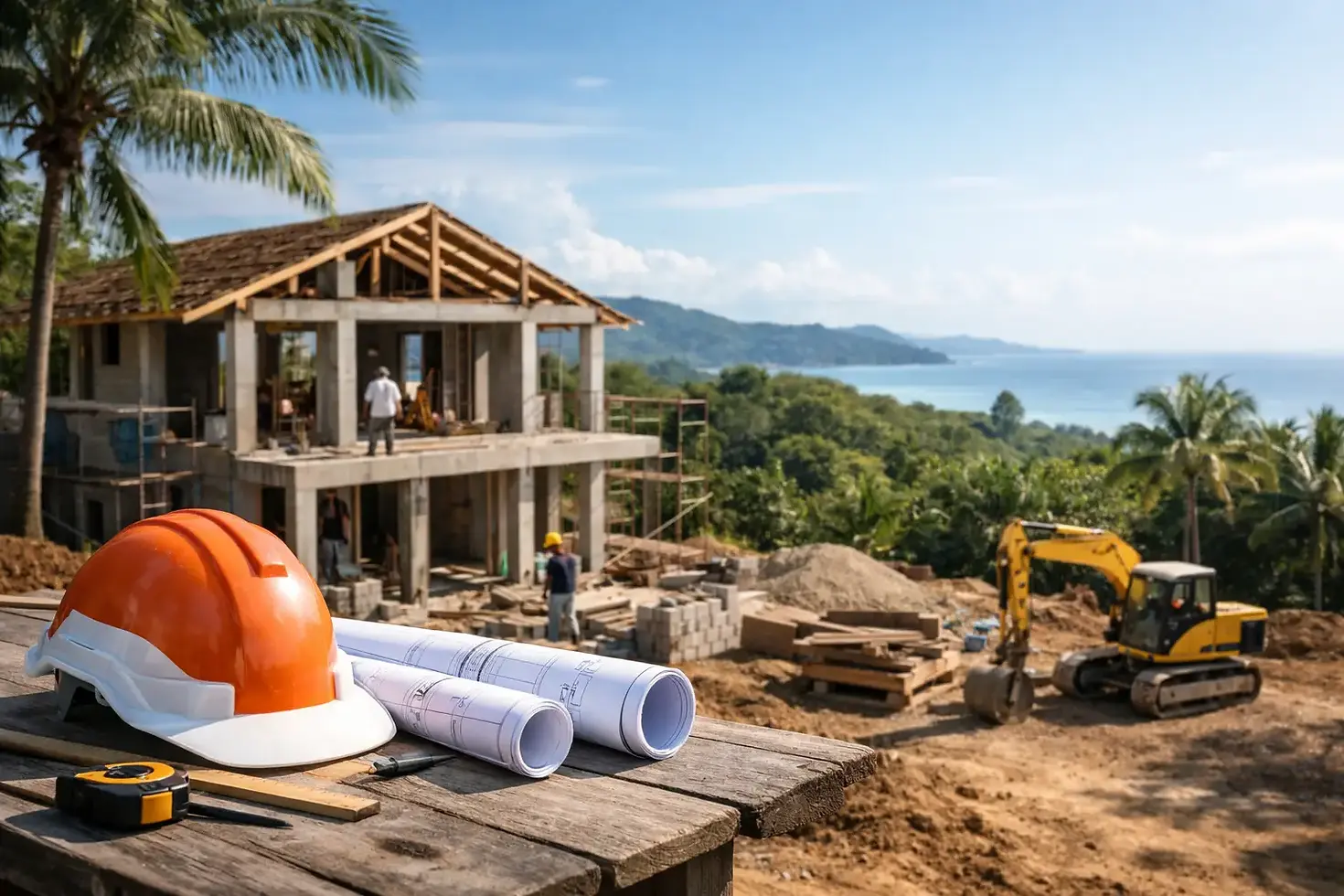
How Long to Build a House in Costa Rica?
- elitebuildinggroup
- Mar 7
- 5 min read

Most buyers ask this question after they fall in love with a lot, a view, or a home concept. The better time to ask it is before you buy, before you wire funds, and before you assume Costa Rica will move on the same schedule as the US or Canada.
So, how long does it take to build a house in Costa Rica? For a well-managed custom home, a realistic range is usually 10 to 18 months from design through final construction, with many luxury homes landing closer to 12 to 18 months. If the project is highly custom, built on a challenging site, or delayed by permitting, utility coordination, or owner changes, it can take longer.
That answer is honest, but it is also incomplete. The real issue is not just how long the build takes. It is what controls the timeline, where delays usually happen, and how to protect yourself from preventable setbacks when you are managing a project from abroad.
How long does it take to build a house in Costa Rica from start to finish?
A house does not begin when the first concrete is poured. It begins with land review, design planning, budgeting, permitting, and team coordination. Buyers who only count the construction phase often underestimate the full process by several months.
For most custom homes in Costa Rica, the timeline usually breaks down into three broad stages. Pre-construction often takes 2 to 6 months. That includes lot due diligence, architectural planning, engineering, budgeting, and permit preparation. Permitting can overlap with parts of this stage, but it often adds time depending on the municipality and project complexity.
Construction itself commonly takes 8 to 14 months for a mid-to-high-end custom home. A smaller, simpler build on an easy lot may move faster. A larger luxury home with premium finishes, retaining walls, pool construction, custom glazing, imported materials, or extensive outdoor living areas will take longer.
Final detailing, inspections, punch-list work, furnishings, landscaping, and utility sign-offs can add another 1 to 2 months. That last stretch matters more than many buyers expect. A house can look visually finished and still not be truly ready for move-in.
What affects how long it takes to build a house in Costa Rica?
The biggest factor is not square footage alone. It is project complexity.
A flat lot in a well-serviced area is very different from a steep ocean-view property that needs soil studies, drainage planning, retaining structures, and careful access for equipment. The second home may be more impressive, but it will not move on the same timeline.
Design decisions also shape the schedule. A straightforward home with standard systems and locally available materials is easier to plan and build. A fully custom luxury residence with imported finishes, oversized windows, specialty stone, smart home integration, and bespoke cabinetry takes more coordination and longer lead times.
Then there is permitting. Costa Rica can be efficient in some regions and slower in others. Municipal approvals, water availability, utility coordination, environmental requirements, and engineering documentation can all affect the calendar. This is one reason buyers should be cautious about anyone promising a fixed timeline before reviewing the lot and scope in detail.
The management structure matters just as much. A strong project moves faster because decisions are made in sequence, contractors are coordinated properly, and payments are released against verified progress. A weak project drifts because one trade waits on another, site issues go unresolved, and the owner learns about problems after time has already been lost.
A realistic timeline by phase
Lot review and pre-construction planning
If you already own land, this phase may still take longer than expected. Before construction, the team needs to confirm what can be built, what the site requires, and whether the budget aligns with the vision.
That can include topographic review, preliminary design, engineering input, utility considerations, and early cost planning. On luxury projects, this stage often saves time later because it reduces redesign, change orders, and site surprises.
A rushed pre-construction phase usually does not create a faster build. It creates a messier one.
Design, engineering, and permits
This phase can move quickly when the project is organized and the client is decisive. It slows down when the scope keeps changing or when the lot presents legal or technical complications.
Expect this stage to take anywhere from 2 to 6 months in many cases. Some projects move faster. Others take longer, especially if municipal approvals are slow or utility requirements are unclear.
For overseas owners, this is where professional oversight becomes especially valuable. Language barriers, inconsistent follow-up, and fragmented local coordination can easily turn a manageable permit process into months of drift.
Construction and finish work
Once permits are in place and the build starts, clients often expect a straight line from foundation to completion. In reality, construction moves in controlled stages.
Site prep, structural work, roofing, mechanical systems, waterproofing, windows, flooring, cabinetry, painting, exterior works, and final finishes each depend on prior tasks being completed properly. A delay in one stage has a ripple effect on the next.
For a luxury custom home, 8 to 14 months is a practical construction window. If the home includes a pool, detached structures, extensive hardscape, custom millwork, or imported finish packages, the timeline should be padded accordingly.
Why some homes take much longer than expected
The projects that run late are not always the biggest. They are often the least controlled.
One common issue is buying land before understanding build constraints. If water access, slope conditions, road access, or municipal limitations are not reviewed early, the timeline starts with a hidden problem.
Another issue is hiring separate parties without a central operator. When design, contractor management, payment control, and owner communication are fragmented, accountability gets blurry. Everyone has a reason for the delay, and no one is truly in charge of solving it.
Owner-driven changes are another major factor. Adjusting layouts, finishes, window packages, or outdoor features during construction can push the schedule significantly, especially when materials must be reordered or trades need to be rescheduled.
Finally, payment structure matters more than many foreign buyers realize. When funds are released without verified milestones, projects can stall or drift. Good scheduling depends on disciplined financial control, not just optimism.
How to keep your Costa Rica build on schedule
The best way to protect your timeline is to make decisions early and put strong oversight in place from day one.
Start with proper lot due diligence. A beautiful property is not automatically a build-ready property. Then align the design with a realistic budget before permits are submitted. That reduces expensive course corrections later.
From there, insist on a clear scope, a construction schedule tied to actual phases, and consistent project updates. If you are building from the US or Canada, you need someone on the ground who is representing your interests, coordinating the build team, and catching issues before they become delays.
Secure payment management is part of that protection. Milestone-based escrow and verified disbursements create discipline around progress and reduce one of the most common risks in overseas construction - money moving faster than the work.
That is why clients working with a full-service firm such as Elite Building Group are not just paying for labor or materials. They are paying for governance, communication, accountability, and a process designed to keep the experience exciting instead of stressful.
The right expectation for international buyers
If you are asking how long does it take to build a house in Costa Rica, the safest answer is this: longer than a brochure might suggest, but far more predictably when the right team is managing the process.
A simple home on a straightforward lot may finish in under a year from permit approval to completion. A custom luxury residence usually needs more time, and that is not necessarily a red flag. In many cases, it reflects better planning, better finishes, and tighter execution.
The goal should never be speed at any cost. The goal is a well-managed timeline, secure financial controls, and a finished home that matches what you approved.
If you approach the process with realistic expectations and experienced project leadership, the wait feels a lot shorter than cleaning up avoidable mistakes after the fact.


Comments