
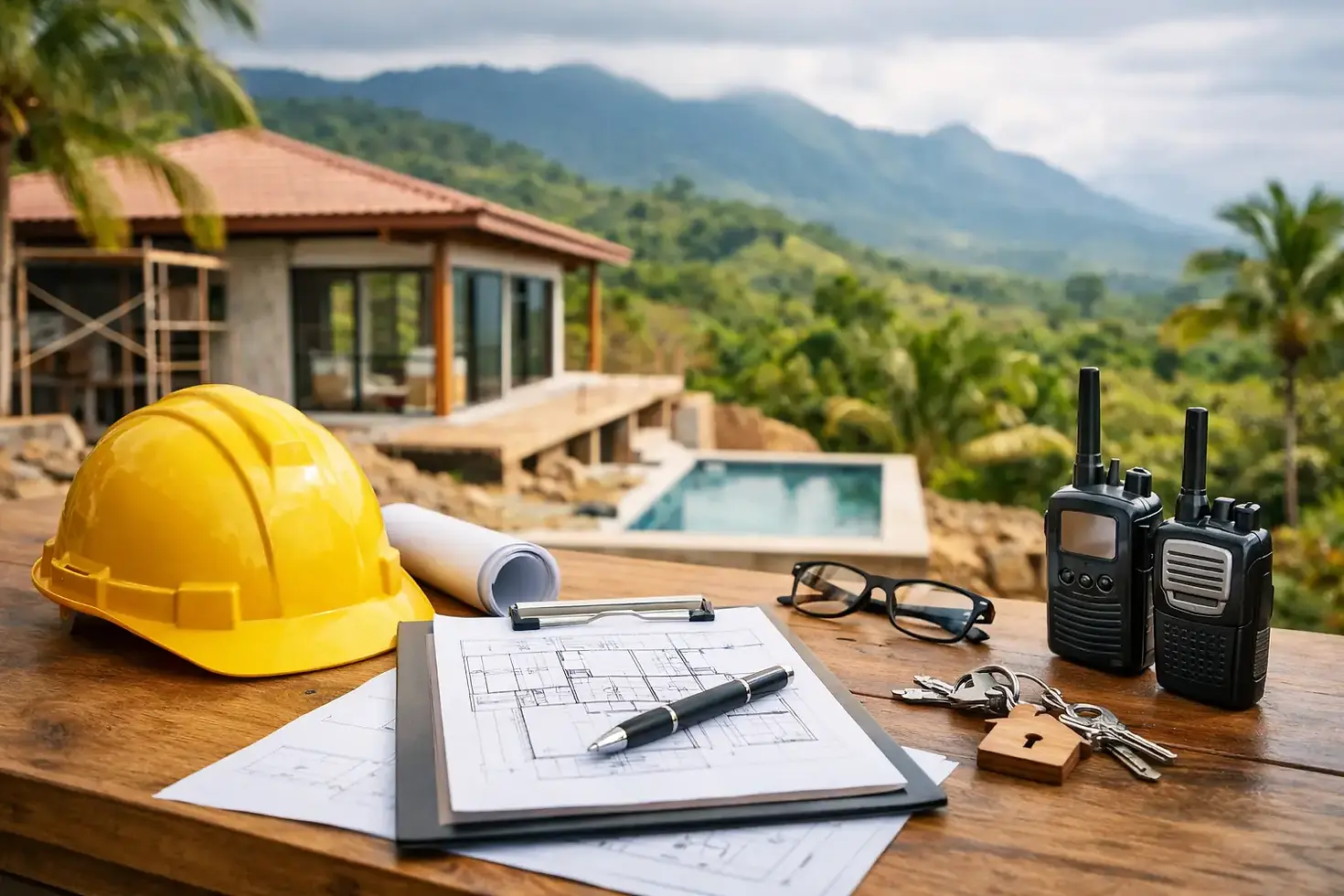
Expat Construction Checklist for Costa Rica Homes

Building in Costa Rica from the U.S. or Canada can go sideways long before the first wall goes up. The lot looks perfect, the renderings are exciting, and the budget feels reasonable - until permits stall, contractor communication breaks down, or money starts moving without clear accountability. That is exactly why an expat construction checklist for Costa Rica homes matters. It protects your timeline, your capital, and your ability to enjoy the process instead of managing problems from another country.
For international buyers, the real challenge is not design inspiration. It is control. You need the right legal structure, the right land due diligence, the right build team, and a payment system that does not leave you exposed. A beautiful home is the result. The real work is building the process around it.
The expat construction checklist for Costa Rica homes starts before design
Most costly mistakes happen before plans are finalized. Buyers often focus on square footage, views, and finishes, but the smarter first question is whether the property and project are actually build-ready.
Start with the lot itself. Not every parcel that looks attractive online is suitable for the kind of home you want to build. Access, slope, drainage, utility availability, zoning, and municipal requirements all affect cost and timeline. Ocean-view lots, for example, may command a premium but can also require more engineering, retaining work, and site preparation. A lower-priced parcel can quickly become the more expensive project.
You also need clear legal review before you treat a property as a viable building site. Title status, boundaries, easements, water availability, and any restrictions on development should be confirmed early. If you are buying remotely, this is not the place for assumptions or verbal assurances. You want documentation, local oversight, and professionals who represent your interests from the beginning.
Secure the right ownership and planning framework
Buying land and building a home in another country requires more than a purchase agreement and a set of plans. You need a clean structure around ownership, contracts, and approvals.
That means understanding how the property will be held, how the construction agreement will be written, and who is responsible for each part of the process. If those lines are blurred, small misunderstandings turn into expensive disputes. The safest projects have clear scopes, documented milestones, defined approval paths, and written expectations for reporting.
Planning also means setting a realistic budget range before the design becomes too ambitious. In Costa Rica, final cost is shaped by far more than finishes. Site conditions, location, access to labor and materials, permitting pace, and specialty systems can all move the number. If your team is not pressure-testing the budget during early planning, you may end up value-engineering your dream home after months of work.
Vet the build team like you are hiring asset managers
This is where many expats get exposed. A recommendation from a friend or real estate contact is not the same as a properly managed construction team. You are not just hiring builders. You are hiring the people who will control your schedule, your cash flow, and the quality of a major international asset.
The right team should include licensed and credible professionals, but credentials alone are not enough. You also want a system for supervision, communication, documentation, and accountability. Who is managing trades? Who is checking progress on site? Who verifies that the work completed matches the payment requested? Who keeps the project moving when one subcontractor slips?
A fragmented team can produce a fragmented result. This is why many international clients prefer a project-led model rather than trying to coordinate architect, contractor, vendors, and payments on their own from abroad. One point of leadership reduces confusion and keeps decisions from falling through the cracks.
Your payment process should be as carefully built as the home
One of the biggest risks in overseas construction is not the build itself. It is how money moves during the build.
If funds are released too early, or without verified progress, you lose leverage and visibility at the exact moment you need both. This is especially risky when you are not living in Costa Rica full time and cannot personally inspect work before each payment. A low initial bid can also become dangerous if the contractor relies on informal change orders or requests for upfront funds to keep going.
A stronger approach is milestone-based payment tied to documented progress. That structure protects both the client and the project. Payments are expected, scheduled, and linked to completed work rather than pressure or guesswork. When escrow is part of that system, it adds another layer of control by keeping funds secure and releases disciplined.
For many expats, this is the difference between feeling informed and feeling trapped. The more transparent the payment structure, the less likely the project is to drift into disputes or budget surprises.
Permitting in Costa Rica is not a side task
Permitting is often underestimated by foreign buyers because it does not feel like visible progress. But it shapes the start date, the pace of work, and your risk profile.
An experienced team should know what is required for your municipality, your lot, and your type of build. That includes managing the sequence of approvals, preparing the right documents, and setting expectations around timing. The process can vary depending on location and project complexity, so anyone promising a universal permit timeline without reviewing your specifics is oversimplifying.
This is also where local knowledge matters. Permits are not just paperwork. They are a coordination issue. If the architect, engineer, legal support, and builder are not aligned, delays tend to compound. For a buyer abroad, that can mean weeks or months of uncertainty with no practical way to intervene.
Communication should be structured, not casual
A luxury build should not run on scattered text messages and occasional photo updates. If you are building from another country, communication must be part of the operating system.
At a minimum, you should know how often updates will be delivered, what those updates include, who your primary point of contact is, and how decisions will be documented. That sounds basic, but it is where many remote builds begin to feel stressful. Silence creates doubt. Inconsistent reporting makes every budget request feel harder to trust.
Good reporting does more than reassure you. It helps you make better decisions. When progress, costs, timeline shifts, and approvals are clearly tracked, you can respond early instead of reacting late.
Don’t separate the home from the full property outcome
For many expats, the home is not just a place to live. It is also a lifestyle asset, a family retreat, or part of a broader investment strategy. That means your checklist should extend beyond vertical construction.
Interior design coordination, landscaping, access planning, and resale positioning all affect the final result. A home can be beautifully built and still underperform if the finish selections miss the market, the outdoor living areas are poorly planned, or the property lacks the polish buyers expect at resale. If this is your second home or an investment property, those details matter even more.
The advantage of an integrated team is that these choices can be managed as part of one strategy instead of treated as disconnected tasks. That keeps the home aligned with how you plan to use it, whether that means private enjoyment, rental income, or long-term appreciation.
A practical checklist for expats building in Costa Rica
Before you commit to land or construction, make sure your expat construction checklist for Costa Rica homes covers the following:
Lot due diligence, including title, access, utilities, water, zoning, and build feasibility
A realistic budget tied to site conditions, design scope, and finish level
Clear legal and ownership structure before contracts or payments begin
A vetted build team with defined project leadership and on-site oversight
Written construction scope, timeline expectations, and change-order process
Milestone-based payment controls with secure fund handling
A permitting strategy based on the actual municipality and project requirements
Consistent reporting with one clear point of contact
Planning for design, landscaping, and final market value - not just construction
If even one of those areas is vague, the project is carrying more risk than it should.
This is why firms like Elite Building Group position project management as protection, not just convenience. For international clients, the value is not simply having someone build the house. It is having the right team control risk, coordinate moving parts, verify progress, and keep the entire process aligned with your goals.
A home in Costa Rica should feel like a reward, not a second full-time job. The smartest checklist is the one that keeps you out of preventable problems before they become expensive ones.


Comments